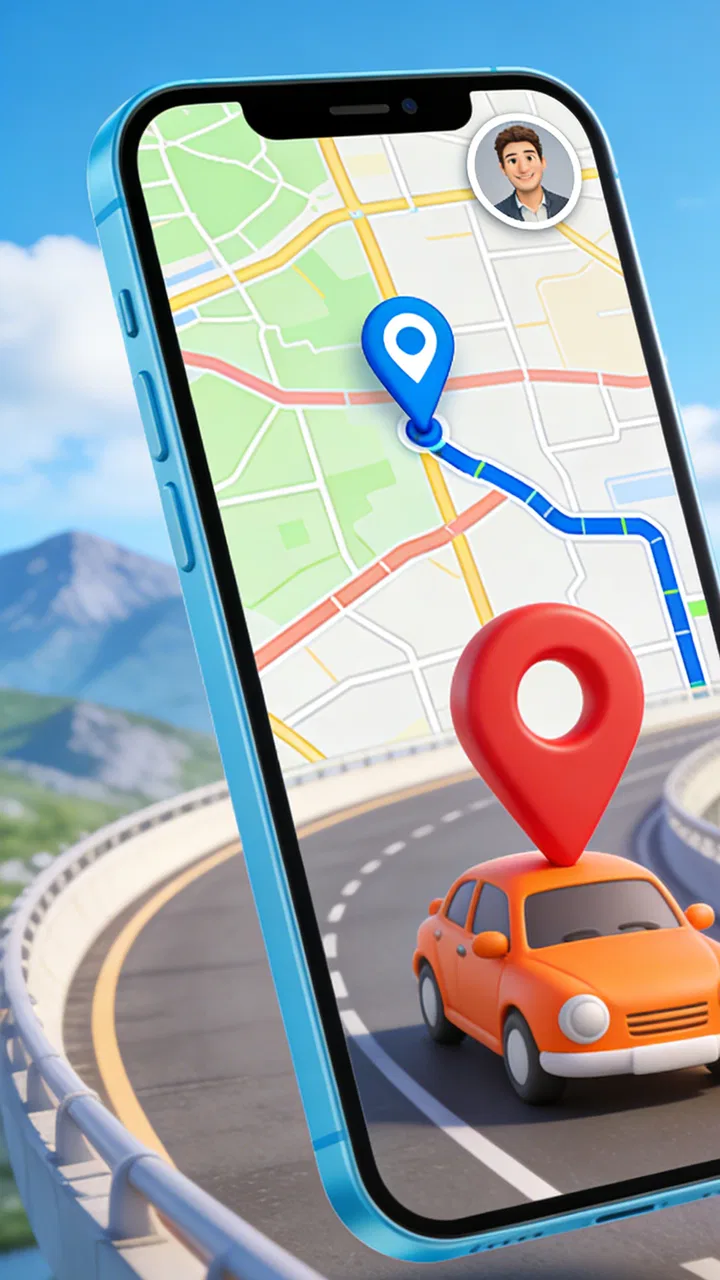
Family GPS Tracker: Geo Find
- 3.6
- Rating
- 1.00M
- Installs
- Free
- Price

 Analysis by App-foxy
Family GPS Tracker: Geo Find caught my attention because it addresses a very practical worry: knowing where family members or a phone may be when a quick call is not enough. I approached it as a daily navigation and safety tool rather than something I would open for entertainment. That distinction matters. A location app can feel extremely useful during its first few days, yet become forgotten if checking it does not fit naturally into household routines.
My overall impression is that this is a straightforward family location app with a clear purpose, but its lasting value depends less on novelty and more on whether everyone involved agrees to use it consistently. It is free to install, aimed at Everyone, and developed by Esame Marketing Limited. The app has reached over 500 thousand installs, while its average rating sits at 3.2 from around 700 ratings. Those figures suggest a product with a real audience, but also one that deserves a realistic look rather than automatic praise.
How the first week feels
The first week is when a family GPS tool usually feels most compelling. Setting up a way to locate a phone can reduce uncertainty during school pickups, commutes, errands, or visits to unfamiliar places. I can easily imagine opening it before leaving home, checking whether a family member is still on the way, and avoiding unnecessary calls. That immediate reassurance is the strongest reason to try this particular app.
You May Also Like

 Blood Strike: 2.5 Anniversary
Blood Strike’s Loadouts Turn Every Drop Into a Tactical Gamble
A close look at Blood Strike’s custom loadouts: how fast access to signature weapons reshapes its battle royale rhythm, rewards preparation, and narrows the gap between fights.

 Pandora - Music & Podcasts
Pandora’s Music Is Easy to Start, but Harder to Recover
Pandora’s strength is its low-effort path from a seed to a station. Its weak spot is how much confidence it asks you to place in connection, setup, and quiet recovery.

 8 Ball Pool
 Is Built on Rivalries, Rematches, and Routine
A close look at the rivalries, rematches, shared routines, and unanswered safety questions that turn a quick pool match into a persistent mobile community.

 Samsung Music
’s Quiet Strength Is Playing What You Already Own
Its reach comes less from spectacle than from dependable access to a personal library. That simplicity is both the app’s strongest retention engine and its ceiling.

 AccuWeather: Weather Radar
AccuWeather Review: A Quick, Clear Forecast for Everyday Decisions
For everyday plans, the best forecast is the one you can understand quickly. AccuWeather makes rain timing, radar, and local conditions easy to act on, with a few trade-offs.

 Hill Climb Racing
Why Hill Climb Racing Still Turns Crashes Into One More Run
A tiny car, a bumpy hill and one more upgrade: Hill Climb Racing keeps resurfacing because its simple chaos makes every near-miss feel personal.
More From Our News Desk



The store description presents it as a GPS tracker with instant location and phone-finding functions. In practical terms, that makes it more focused than a general mapping app. A normal map is excellent for finding an address or planning a route, but it does not center the experience around keeping track of people or locating a phone. A messaging app can provide occasional location sharing, yet that often depends on someone remembering to send a location manually. This app is designed around the tracking question itself.
There is also a useful distinction between planned and unplanned use. Planned use might mean checking that a child has arrived at school or confirming that a relative is close to home. Unplanned use is more stressful: a phone has been misplaced, someone is late, or a person has taken an unfamiliar route. A dedicated locator can be more convenient in those moments than searching through several conversations or opening a full navigation service.
My advice during the first setup is to decide exactly who needs access and why. Location tools work best when the people being located understand the arrangement. A family member who feels monitored rather than helped may stop cooperating, which quickly weakens the app’s usefulness. I would treat it as a shared safety habit, not as a silent surveillance tool.
Another early lesson is to test the workflow before relying on it. Try checking a location at an ordinary time, then repeat the process when the person is away from home. This is more useful than assuming that a location screen automatically solves every emergency. The important question is not simply whether the app can show a place, but whether you can reach the right screen quickly and interpret what you see without hesitation.
That test also reveals whether the app suits the family’s phones and routines. The current version is 1.1.5 and it supports devices running Android 7.0 or later. For many Android users, that makes the compatibility requirement fairly approachable, but anyone using an older phone should check the operating system before building a household plan around it. A tracker is only helpful when the devices that matter can actually run it.
Where it helps in ordinary family life
Consider a realistic weekday: one parent is finishing work, a teenager is travelling home, and another relative is waiting at the house. Instead of sending repeated “Where are you?” messages, the parent can use the location tool as a quick status check. If the teenager is still moving along the expected route, there may be no need to interrupt them. If the location appears unexpectedly different, the parent has a reason to call and clarify.
That scenario shows the best kind of value here. The app does not replace communication, and I would never treat a displayed location as proof that everything is fine. It can reduce routine checking and provide context before making a call. Used this way, it supports a family conversation instead of trying to become one.
It may also be useful for adults caring for older relatives who carry a phone but do not always respond immediately. A location check can offer a starting point when a normal call goes unanswered. Still, I would keep expectations modest. A location app should be one layer of reassurance, not a substitute for agreed check-in times, emergency contacts, or direct help when a situation genuinely looks serious.
The phone-locator angle has a different benefit. Misplacing a phone at home can be surprisingly disruptive, especially when the device is needed for calls, authentication, or travel. Having a dedicated route to locating it may be more convenient than borrowing another phone and searching through account settings. The trade-off is that the feature is only valuable if the app and the relevant location setup were prepared before the phone disappeared.
The difference between a useful check and constant checking
One non-obvious trade-off is psychological rather than technical: easy access to a family location can encourage unnecessary checking. During the first week, I might open the app simply because I can. That can create a habit of watching movement rather than using the tool for a defined purpose. I would set a small number of sensible moments for checking, such as before a pickup or after an expected arrival, and avoid turning the map into a live family dashboard.
This approach also protects battery, attention, and trust. The more often people feel watched, the less likely they are to regard the app as a helpful safety arrangement. The strongest setup is one that everyone understands and can tolerate month after month.
What remains useful after the novelty fades
The real test for Family GPS Tracker: Geo Find is not whether it feels impressive on the first day. It is whether it earns a place in a routine several weeks later. I think it can do that for households with a recurring need for location awareness, particularly when family members travel separately and ordinary messaging feels too manual.
Its month-to-month value comes from reducing small moments of uncertainty. A parent may want to know whether a child has reached a destination. A partner may want context when someone is late. A caregiver may want a quick way to check a phone’s location. None of these situations happens constantly, but together they can justify keeping a focused tool installed.
The app is less convincing for people who only need occasional directions. If your main requirement is finding restaurants, planning journeys, or navigating public transport, a conventional maps app will almost certainly be the better fit. This product’s purpose is narrower. Its value appears when the question is “Where is this family phone?” rather than “How do I get there?”
It also competes with built-in phone-finding services and location sharing already available through familiar communication platforms. Those alternatives may be preferable for users who want fewer apps or who already have a well-established family sharing system. I see this app as most appealing when you want a dedicated family-tracking experience instead of mixing location checks into messages, contacts, or a broader device-management service.
One practical insight is to connect the app to a clear household rule. For example, everyone could agree that location checks are used for arrival confirmation and genuine concern, not for inspecting every stop. This turns the app from a novelty into a predictable part of family logistics. Without that agreement, even a technically useful tracker can become a source of arguments.
The maintenance that determines whether it lasts
Location apps carry more maintenance than their simple interface may suggest. Phones change hands, batteries run low, people switch devices, and routines change during holidays or school breaks. A setup that works perfectly in the first week may become unreliable if nobody checks it after a phone upgrade or a change in daily travel.
I would schedule a brief monthly check rather than waiting for a stressful situation. Confirm that the correct family members are still included, that the app opens normally, and that everyone remembers how to use the phone-locator function. This is not exciting maintenance, but it is the difference between having an installed app and having a dependable tool.
Another useful habit is to review the app after major changes in the household. If a child begins travelling independently, if an older relative gets a new phone, or if a family member stops wanting to share their location, the arrangement should be updated rather than left running by default. Respecting those changes keeps the system practical and avoids treating location sharing as permanent permission.
The free price makes trying the app easy, but in-app purchases range from around two dollars and fifty cents to around ten dollars per item. I would not spend immediately. First, I would use the free experience long enough to decide whether the app fits the family’s routine. The important question is not whether an optional purchase adds something attractive, but whether it solves a recurring problem that the household genuinely has.
That pricing structure creates a useful decision point. Someone who only wants an occasional phone locator may find the free installation sufficient, while a family that relies on the app regularly may consider an optional purchase more reasonable if it improves the workflow they actually use. I would approach any purchase as a commitment to a habit, not as a way to make a rarely opened app feel more valuable.
Where fatigue begins
The main source of fatigue is repetition without a clear payoff. If every location check simply confirms that someone is at home or following the same route, the app may gradually disappear from attention. That is normal, and it does not necessarily mean the app failed. Safety tools often provide value through occasional reassurance rather than constant engagement.
There is also the risk of false confidence. A map location can be delayed, misunderstood, or disconnected from the person’s actual wellbeing. I would never use a normal-looking location as a reason to ignore a worrying call, missed appointment, or unusual behavior. The app can add information, but it cannot interpret a family member’s condition or replace direct contact.
Trust is another long-term pressure point. A family member may accept location sharing for a school commute but object to unrestricted monitoring. The best way to prevent fatigue is to define boundaries early: when checking is appropriate, who can view the location, and what happens if someone wants to pause sharing. Those are social decisions, but they determine whether the technical tool remains welcome.
The app’s average rating of 3.2 indicates that the experience is not universally smooth for everyone who tries it. I would read that as a reason to test it carefully on the actual phones and routines that matter, rather than assuming the store summary tells the whole story. A focused app can be valuable to one household and unnecessary friction to another.
Who should use it, and who should skip it
I would recommend trying it if you want a dedicated family GPS tracker, regularly coordinate pickups, care about locating a family phone, or need a simple location check that sits apart from ordinary conversations. It is especially relevant when several people share a predictable safety routine and are comfortable with transparent location sharing.
I would skip it if your needs are primarily turn-by-turn navigation, if nobody in the household will maintain the setup, or if your family already uses a built-in location service that everyone understands. Installing another app does not automatically improve safety. In some homes, one familiar system used consistently is better than two overlapping tools.
I would also avoid making it the sole solution for urgent emergencies. A tracker can help establish context, but it should sit alongside direct calls and whatever emergency process the family already trusts. That limitation is important because the app’s purpose is location awareness, not professional emergency response.
My long-term verdict
After the first-week appeal fades, I see Family GPS Tracker: Geo Find as a useful but specialized app rather than an essential installation for everyone. Its strongest quality is focus: it puts family location and phone finding at the center instead of burying those tasks inside a broader navigation or messaging experience.
Its lasting value depends on three things: a shared agreement about privacy, a quick routine for checking locations, and occasional maintenance when phones or schedules change. If those conditions are present, the app can quietly earn its place by reducing unnecessary calls and providing reassurance during everyday travel.
If those conditions are missing, the app may become another icon that seemed important during setup and then went untouched. The free installation lowers the risk of trying it, while the Everyone age rating makes its intended audience broad. Still, I would judge it by repeated household use, not by the appeal of seeing a map on the first day.
My recommendation is therefore measured but positive: try it when your family has a specific, recurring need for location checks, test the workflow before relying on it, and agree on boundaries before inviting others into the system. For that audience, it can be a practical companion. For everyone else, a familiar built-in phone locator or regular mapping app may be simpler, less demanding, and better suited to the way they already manage daily life.
FAQs for Family GPS Tracker: Geo Find
01What is Family GPS Tracker: Geo Find and how does it work?
Family GPS Tracker: Geo Find is a mobile application designed to help families keep track of each other's locations in real time. By using GPS technology, it allows family members to share their location on a private map. This app is particularly useful for ensuring the safety of children and elderly family members by providing peace of mind and instant location updates.
02Is Family GPS Tracker: Geo Find safe to use?
Yes, Family GPS Tracker: Geo Find prioritizes user safety and privacy. The app uses secure servers to transmit location data and allows users to control who can see their location. Only invited family members can access your location, ensuring that your data remains private and protected from unauthorized users.
03What features does Family GPS Tracker: Geo Find offer?
Family GPS Tracker: Geo Find offers a variety of features including real-time location tracking, location history, and geofencing alerts. Users can set up safe zones and receive notifications when a family member enters or leaves these areas. Additionally, the app includes an SOS button for emergencies, which sends instant alerts to all family members.
04Does Family GPS Tracker: Geo Find require a subscription?
Family GPS Tracker: Geo Find is available as a free download with basic features. However, to access premium features such as extended location history and advanced alerts, users may need to subscribe to a paid plan. Subscription details and costs can be found within the app's settings or on the app store page.
05Can Family GPS Tracker: Geo Find drain my phone's battery?
Like many GPS-based applications, Family GPS Tracker: Geo Find can impact your phone's battery life, especially when running continuously in the background. However, the app is optimized to minimize battery usage by using efficient location tracking algorithms. Users can also adjust location update frequency in the app settings to conserve battery.
Pros
- Real-time location tracking for family safety.
- Geofencing alerts when family members arrive or leave.
- User-friendly interface with intuitive controls.
- Battery-friendly operation to conserve phone charge.
- Cross-platform support for Android and iOS devices.
Cons
- Requires constant internet connection to function.
- Limited features available in the free version.
- Privacy concerns with location data sharing.
- Notifications can be delayed occasionally.
- Subscription cost may be high for some users.

Family GPS Tracker: Geo Find
Gallery